Israel
IDF withdraws from Hebron after 11-day operation that displaced thousands
By Jewish Life Staff, . Jewish Life.
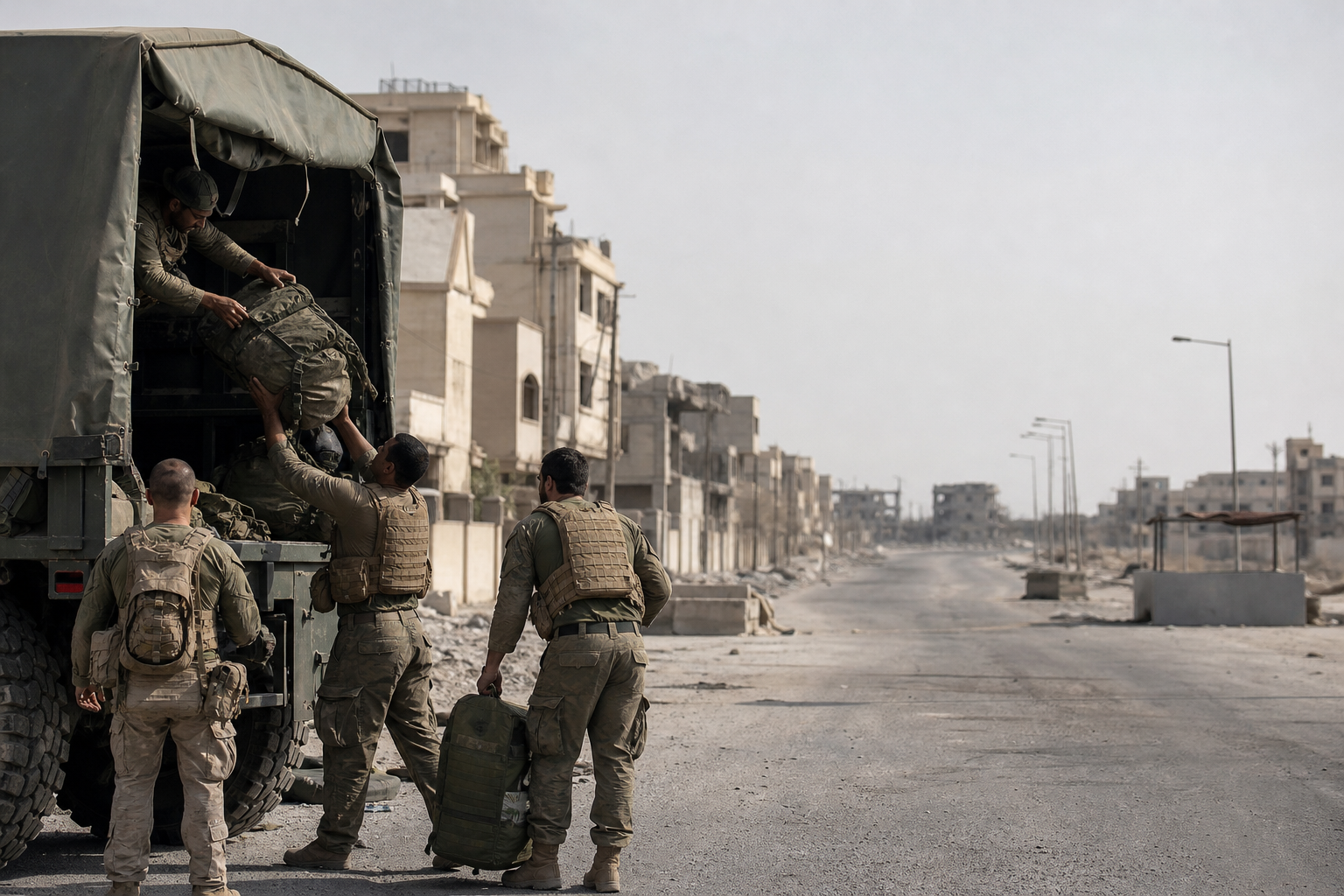
Israeli soldiers left Hebron on Monday morning, ending an operation that had drawn sharp criticism over the forced displacement of thousands of Palestinian civilians from a neighborhood in the West Bank city.
What triggered the operation
The raid began on October 23 after a Hamas attack killed two Israeli soldiers, according to JNS. The Israel Defense Forces said the attackers were connected to a broader Hamas-affiliated clan living in the neighborhood and used that connection to justify occupying the area and evacuating its residents.
The Palestinian Authority's WAFA news agency put the number of displaced Palestinians at approximately 3,300, according to the Times of Israel. The IDF, the report said, never presented concrete evidence showing how most of those evacuated were individually linked to any specific offense.
Why the exit was delayed
According to the Jerusalem Post, IDF Chief of Staff Lt.-Gen. Eyal Zamir had recommended ending the operation and allowing residents to return as early as the Sunday and Monday of the previous week, saying inspections were complete and no clear military reason remained to stay. Prime Minister Benjamin Netanyahu rejected that recommendation before last week's election.
After the election results came in and Netanyahu found himself in a stronger political position than expected, the Post reported, there was increased expectation he might follow the military's advice. Katz gave the formal approval to withdraw on Sunday night, the Times of Israel reported.
What the operation involved
During the raid, soldiers searched buildings and detained suspects for questioning, JNS reported. A legal petition cited by the Jerusalem Post alleged that troops occupied some homes and converted them into military positions, demolished civilian structures, and required traders to clear goods from their businesses.
The IDF also said it destroyed structures it described as illegally built and likely to complicate future security operations, though the Post reported the military was vague about what those operations would be and why full buildings had to come down to enable them.
The Post drew a contrast with earlier West Bank operations: when Israel cleared parts of Jenin, Tulkarm, and Nur al-Shams in early 2025, displacing close to 40,000 Palestinians, those areas had documented histories of large, organized armed groups going back to 2022. In Hebron, the report said, the IDF offered little specific information about the offenses of those evacuated beyond their family connection to the Hamas-linked clan.
The Post also noted that public statements by Netanyahu and Katz had focused on clearing or destroying the neighborhood of the two men responsible for the October 23 attack, and suggested the operation appeared to function as a form of collective punishment, a characterization the publication attributed to its own analysis of the available evidence.
What comes next
JNS reported that the Judea Brigade, the IDF unit responsible for the area, has shifted back to its standard defensive mission. Tens of thousands of Jewish visitors are expected to travel to Hebron this coming weekend, the report said, for a traditional pilgrimage to the Cave of Machpelah, a site sacred in Judaism as the burial place of the biblical patriarchs and matriarchs.
Sources
1. IDF ends controversial Hebron operation after days of terror probe, forced evacuations, jpost.com
2. IDF ends controversial 11-day Hebron operation that followed deadly shooting attack, timesofisrael.com
3. Hebron: IDF ends 10-day counterterrorism operation, official tells JNS - Israel & Jewish News - JNS, jns.org